The Future of SEO Is ChatGPT for Pharmacies and Clinics
Patients are increasingly asking AI assistants for healthcare recommendations instead of scrolling through search results.
For the last 15 years, healthcare marketing meant one thing: get to the top of Google. Pharmacies and clinics invested in keywords, backlinks, blog posts, and local SEO to rank above competitors in search results.
That world is changing. Patients are increasingly asking AI assistants—ChatGPT, Google AI Overviews, Perplexity, Siri, and Alexa—for healthcare recommendations instead of scrolling through search results. When a patient asks "What's the best pharmacy near me for prescription transfers?" or "Which local clinics offer remote patient monitoring?", the AI reads the internet and answers directly. No blue links. No scroll. No page two.
If your SEO strategy is built for 2018 Google, you are optimizing for a declining channel. Here is what is replacing it and what pharmacies and clinics should do now.
How AI Search Discovery Works
Traditional search returns a list of links. The patient clicks, browses, and chooses. AI search returns a synthesized answer. The patient asks a question and gets a recommendation, often with a single source cited or no source at all.
This means:
- Being ranked #1 on Google matters less if the AI does not mention you in its answer
- Having readable, specific, structured content matters more than keyword density
- The AI synthesizes information from multiple sources—your site, your Google Business Profile, review sites, directories, and other references
- If your information is inconsistent across sources, the AI may skip you or present conflicting information
Why This Matters for Pharmacies
When a patient asks ChatGPT "Where can I transfer my prescriptions near me?", the answer depends on what the AI can find about your pharmacy:
- Can it read your services page? (Or is your service list an image?)
- Does your site mention "prescription transfers" as plain text?
- Is your location and hours consistent across your site, Google Business Profile, and Yelp?
- Do you have reviews that mention transfer ease, wait times, or staff helpfulness?
- Does your site state which insurance plans you accept?
If your competitor's site has all of this in readable text and yours does not, the AI will recommend them.
Why This Matters for Clinics
When a patient asks "Which clinics near me accept Medicare and do chronic care management?", the AI looks for:
- Clinic name and location in structured data
- "Medicare" stated as accepted insurance (not "most major plans")
- "Chronic care management" or "CCM" as a listed service
- Hours, phone number, and appointment information in machine-readable form
- Consistent information across your website and healthcare directories
A clinic that says "comprehensive primary care" matches nothing. A clinic that says "Medicare-participating primary care clinic offering chronic care management, annual wellness visits, and remote patient monitoring" matches everything.
What to Do Now
1. Write for Questions, Not Keywords
Patients ask AI in natural language. Instead of optimizing for "pharmacy near me," write content that answers:
- How do I transfer my prescription to [your pharmacy]?
- What immunizations do you offer?
- Do you accept [insurance plan]?
- How do I set up auto-refill?
- What chronic care services does your clinic offer?
Each question should have a clear, direct answer on your site in plain text.
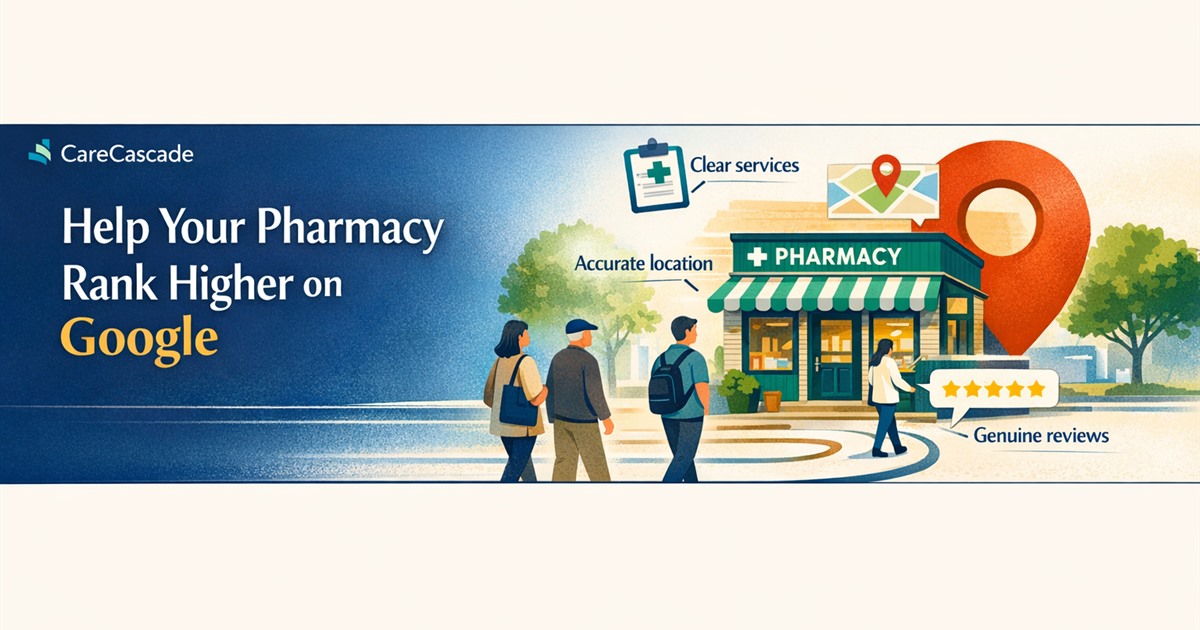
2. Make Your Google Business Profile Complete and Accurate
AI search relies heavily on Google Business Profile data. Ensure yours includes:
- All services listed (not just "pharmacy" or "clinic")
- Accepted insurance plans
- Accurate hours including holiday schedules
- Photos with descriptive alt text
- Current reviews and responses
3. Get Listed in Healthcare Directories
LLMs pull from multiple sources. Ensure your practice is listed and accurate in:
- Healthgrades, Zocdoc, and other clinic directories
- Pharmacy directories (GoodRx, SingleCare)
- Your state pharmacy association directory
- Insurance plan provider directories
- NPI Registry (ensure your practice location and specialties are current)
4. Encourage and Respond to Reviews
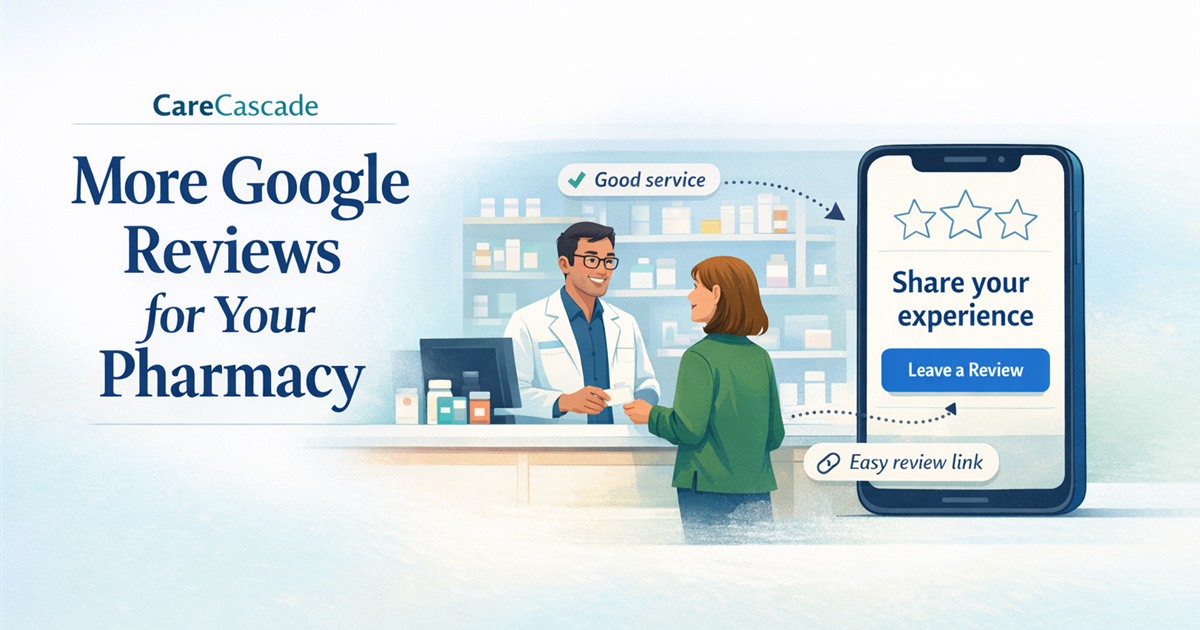
Reviews are a signal for AI recommendations. A pharmacy with 200 reviews mentioning "easy prescription transfer" and "friendly staff" will be recommended over one with 15 generic reviews. Respond to reviews—both positive and negative—to show active management.
5. Monitor What AI Says About You
Search for your pharmacy or clinic name in ChatGPT, Perplexity, and Google AI Overviews. Ask:
- What services does [your name] offer?
- Does [your name] accept [insurance]?
- How do I transfer my prescription to [your name]?
If the answers are wrong or incomplete, fix the content gaps on your site and in your directory listings, then recheck.
The Bottom Line
SEO is not dead, but it is no longer the only discovery channel. Patients are asking AI assistants for recommendations, and those assistants read the internet differently than Google's crawler. They want clear, specific, structured, consistent information—not keyword-optimized content.
Pharmacies and clinics that make their information AI-readable now will be the ones AI recommends. Those that wait will lose referrals they cannot track.