Online prescription intake
How Independent Pharmacies Can Take Refill and Transfer Requests Online
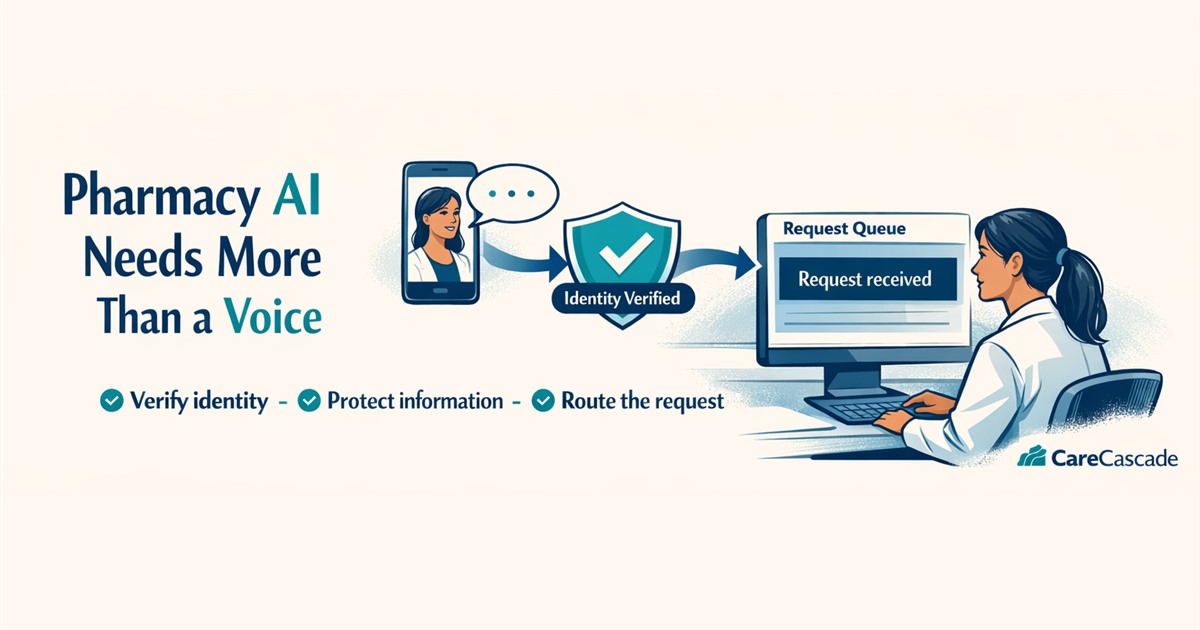
The form is the easy part. What decides whether the service works is everything after “Submit”: pharmacist review, the exceptions, and knowing the request actually finished.
A patient realizes at 8:30 at night that she needs to move a prescription to your pharmacy. She has the bottle in her hand and knows where it is currently filled. She is not expecting a pharmacist to answer after hours. She simply wants to start before she forgets.
At a chain, she can probably begin online. She may have to create an account or work through a long portal, but the front door is open. At many independent pharmacies, the only instruction is still: call us tomorrow.
An independent pharmacy can offer that online starting point without becoming impersonal or handing professional decisions to software. The patient gets convenience, and the pharmacy remains available when the request does not fit the normal path.
An online request is not a completed prescription
The patient may enter her contact information, identify the current pharmacy, and name the prescription she wants reviewed. The page can confirm receipt. It should not claim that the prescription has already transferred or promise that it is covered, stocked, or ready.
Pharmacy staff still determine:
- Prescription validity
- Refill availability
- Transfer eligibility
- Federal and state restrictions
- Payer issues
- Inventory
- Dispensing
- Counseling
The same distinction applies to refills. Entering an Rx number does not establish that refills remain, that the prescription has not expired, or that prescriber action is unnecessary.
Controlled substances add another layer. Federal rules limit how and how often some controlled-substance prescriptions may be transferred, and state law may be more restrictive. An intake page should not imply that every request can be honored; these requests belong with a pharmacist.
A form that emails a submission to the pharmacy solves only the first few seconds. Someone still has to notice the message, identify the request, assign it, gather missing information, contact the patient, and check whether the process actually finished.
The work that follows “Submit”
A request may pass through several decisions and communications before pickup or delivery. Stage 4 is dashed because it applies only when the request needs outside action.
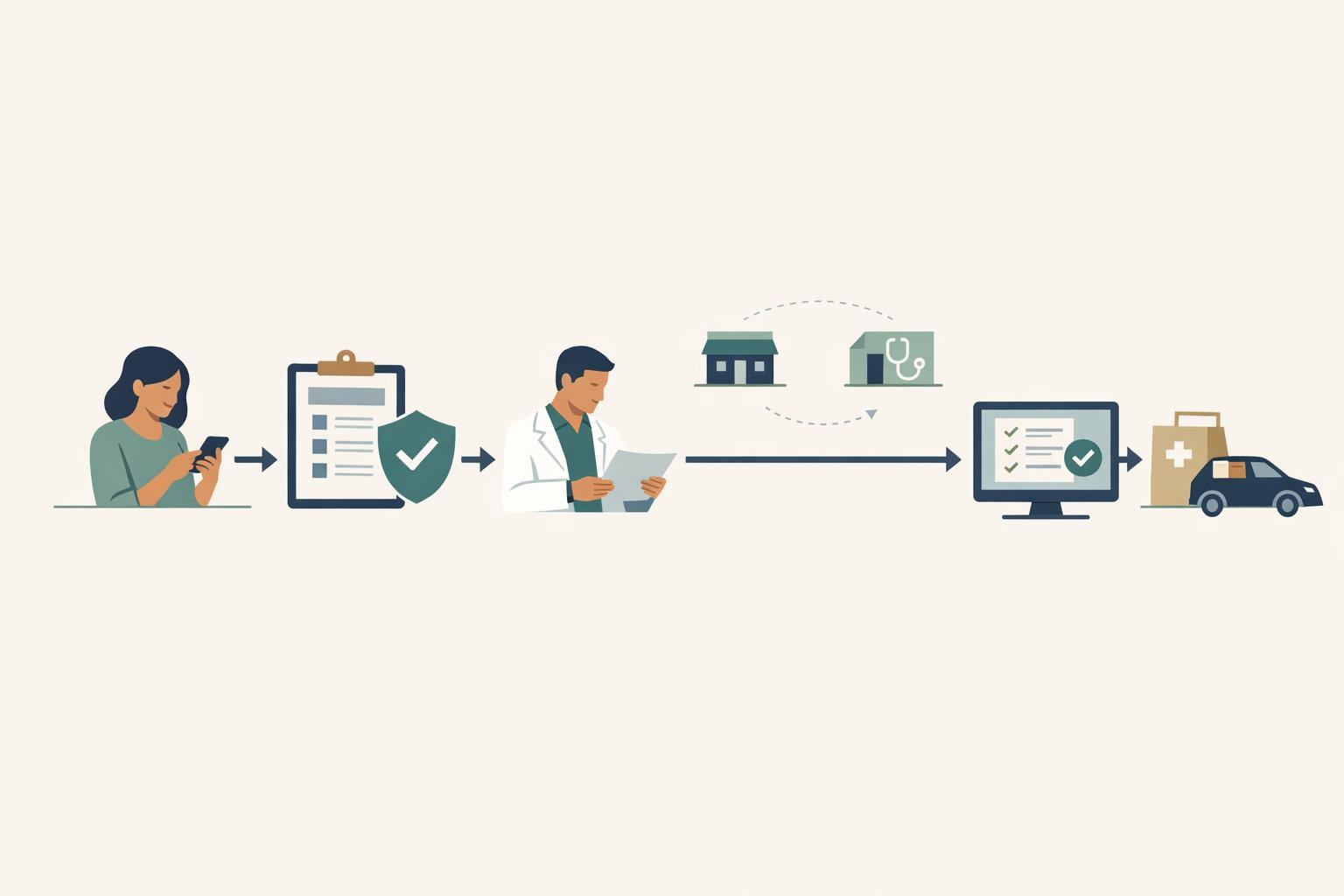
Patient request
A refill or transfer request starts online.
Secure intake
Required fields are checked and receipt is acknowledged.
Human review
Pharmacists and staff keep legal, clinical, and dispensing control.
Exceptions, when outside action is needed
The prior pharmacy, prescriber, payer, or patient may need to act first.
Status and readiness
Patient updates continue until the pharmacy system confirms readiness.
Follow-through
Pickup reminders, delivery coordination, and completion are tracked.
The request needs an owner and a next action
After submission, the request should enter a system the pharmacy has vetted for protected health information, with an owner, a status, and a next step. Missing information should create a follow-up task, not a stalled thread. Pharmacist review goes to the pharmacist. Work waiting on someone outside the pharmacy becomes visible rather than a forgotten email.
A form on its own
The patient submits, a notification email arrives, and the request survives only if someone remembers it.
A form inside a tracked process
The patient submits, the request gets an owner, a pharmacist reviews it, the patient hears back, readiness is confirmed, and the outcome is recorded.
Updates to patients need rules, not just triggers
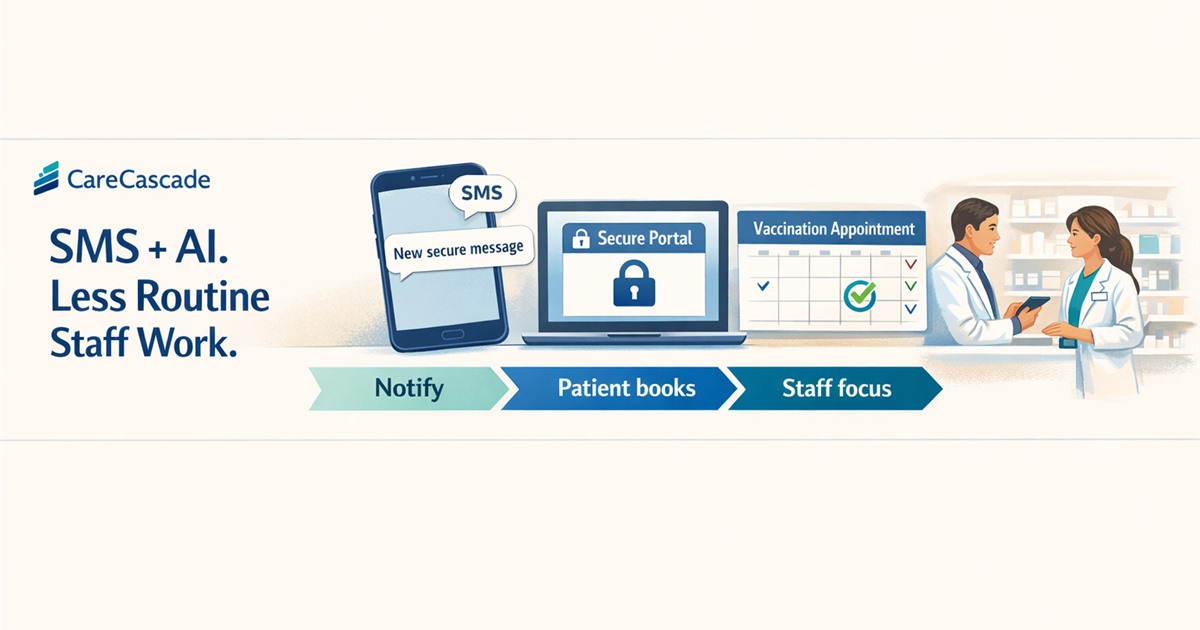
The patient should hear back as the request moves forward. If a message gets no response, the workflow can wait, send one reminder, create a callback task, or place a short administrative call, each within the limits the next paragraph describes.
These communications require rules. Texts and automated calls may require consent, honored opt-outs, contact-hour and frequency limits, and a process for wrong-party contact. Clinical questions, urgent statements, complaints, and unexpected responses belong with a person.
Once the pharmacy’s system of record confirms readiness, the workflow can send pickup information or coordinate delivery where the pharmacy offers it. It should never infer readiness from the original submission.
This is medical information, not a general contact form
HTTPS is not the test. A personal Google Form, an ordinary Jotform account, or a generic website form is not made appropriate for prescription information by the padlock in the address bar.
Google Forms and Jotform can be used in some healthcare environments, but only under qualifying service arrangements and correct configuration. Depending on the pharmacy and vendor relationship, this may include a qualifying account or plan, functionality the vendor lists as covered, administrative controls, and a business associate agreement.
The platform matters
A personal or ordinary account is not equivalent to a properly administered healthcare environment. Access, sharing, authentication, and covered functionality need review.
The entire data path matters
Storage, notification email, spreadsheets, analytics, integrations, SMS and call vendors, staff access, exports, backups, and retention all need review.
A BAA may be required when a vendor handles protected health information for a covered pharmacy. A BAA alone does not make every setting, integration, disclosure, or downstream service appropriate.
Official guidance: Google Workspace HIPAA guidanceJotform HIPAA informationHHS business-associate guidance
Where independent pharmacies can improve on chain portals
Chains have taught patients to expect an online starting point. They have not always made that starting point pleasant. Patients may face mandatory account creation, long forms, vague eligibility errors, or uncertainty about whether the transfer happened and whether the first fill is being processed.
An independent pharmacy can make the request shorter, mobile-friendly, and written in plain language. It can explain what happens next and provide access to a real person when the request is unusual.
The goal is not instant approval. It is a reliable handoff from the patient’s phone to the pharmacy team, followed by clear communication until the request reaches a documented outcome.